
Highway Bill House-Senate Conference Committee May Resolve Issues as Early as Today– Key Issues For The Trucking Industry

The multi-year highway bill is in the last stretch of negotiations before being sent to the president. The six-year transportation bill passed the House earlier this month authorizing $325 billion in transportation through the 2021 federal budget year for the construction and maintenance of roads, bridges and transit systems – including $261 billion for highways alone.

The differences between the recently passed House bill and the highway bill passed by the Senate back in July must be resolved by a conference committee comprised of members from each house of Congress before a final bill can be sent to President Obama’s to sign and become law. The conference committee now has until December 4th to pass the long-term bill, after passing a two-week highway funding extension last week to ensure the country’s road and bridge accounts won’t run out while the bill is finalized. It is anticipated resolution could happen as early as today.

The American Trucking Association (ATA) has praised the House for passing the long-term bill, as it takes steps to improve highway safety and efficiency. The ATA commends the lawmakers’ continued support for the federal role in transportation instead of leaving the funding of roads and bridges to the states. However, the recent House version of the bill has been causing controversy among the trucking industry and may pose problems for small carriers and owner-operators.

The following lists a few key topics of the House bill that are brewing among the trucking industry.

• The House bill, if law, would require the FMCSA to remove the carrier rankings in the Compliance, Safety, Accountability program from public view and require regulators to rework the program. Critics fear this will benefit only carriers with poor safety scores.
• The bill sets forth criteria brokers and shippers should use when determining whether to hire a motor carrier. It states that a motor carrier must have in effect a satisfactory safety rating from FMCSA. Critics say these “interim hiring standards” for those hiring carriers (such as brokers) could damage owner-operators’ and other small carriers’ ability to secure customers because the standard is written in a way that discourages business from a large number of unrated carriers – which make up a majority of the industry. Only a minority of motor carriers have actually been reviewed in full, which is the only way FMCSA can issue a safety rating. Therefore, there is a fear that the standard will exclude independents and small carriers working with brokers. But, lawmakers will continue to work on on this section’s wording during the House-Senate conferencing over the next two weeks.
• The House bill allows carriers to satisfy driver drug testing rules by testing hair samples only, instead of by urine analysis.
• The bill lowers the minimum age for interstate truck drivers from 21 to 18 years of age. It sets up a program that allows states to enter into compacts to let under-21 CDL holders cross state lines. While some are against the lower age limit because studies show younger drivers increase the number of crashes, the ATA views this lower age limit as a benefit. The trucking industry currently loses potential drivers who graduate high school because they are not old enough to drive interstate, so they instead enter other professions. Therefore, these changes may benefit trucking companies struggling to find enough drivers to fill jobs.
• The bill will eliminate time limits on the time drivers are allowed to be on the road, reducing mandatory rest requirements. Safety groups are against exemptions for the federal rest requirement, advocating that fatigued drivers do not create safer roads.
• The House bill rejected an amendment that would increase the truck weight limits on interstate highways from 80,000 pounds to 91,000 pounds for trucks with six axles. Advocates for the increase believe the amendment would improve efficiency by shipping large commodities while also reducing the number of trucks on interstate highways. However, safety groups again argue that bigger trucks do not create safer roads. This issue will be resolved during the House-Senate conferencing.

The multi-year highway bill will be a six-year bill. That is, if Congress is able to find a way to pay for the last three years. As of now, the bill only provides enough money for the first three years of the period, since lawmakers have been unable to resolve political differences over funding the entire six years. And lawmakers hope their two-week highway funding extension will be their last as they work on agreeing to the multi-year highway bill by December 4th.

Anna Newell is an associate attorney at Roberts Perryman. Anna’s practice focuses on transportation, insurance coverage and defense.

Anna Newell

Roberts Perryman has been a leader in transportation defense for over 50 years with offices in St. Louis and Springfield, MO and Belleville, IL. http://www.robertsperryman.com


 

Posted in Uncategorized | Leave a comment

In Praise of ATRI’s Non-Preventable Crash Study

Imagine this scenario: You are sitting in your car at a red light waiting for the light to turn green. You glance in your rearview mirror and see another car in your lane barreling towards you, not a split second passes before you feel the impact. You have been rear-ended. As a result of the accident: you have been labeled an unsafe driver; your driving privileges are being monitored and/or limited; and it has been determined that the likelihood of you being involved in a future accident has increased. How is this fair? The accident was not your fault and there was nothing you could have done to prevent it! It shouldn’t affect your future driving status!

Members of the trucking industry have reacted similarly to the FMCSA-Compliance, Safety, Accountability (CSA) program’s current approach for evaluating motor carrier’s non-preventable crashes which directly reflects in a motor carrier’s overall safety performance. The continued buzz around this topic sparked the American Transportation Research Institute’s study, released earlier this month, “Assessing the Impact of Non-Preventable Crashes on CSA Scores”, discussed below.

Understanding FMCSA-CSA Safety Performance Evaluation Fundamentals: Under CSA, both carriers and drivers receive safety scores across seven Behavior Analysis and Safety Improvement Categories (BASICs). The BASIC measurements are then used to identify and prioritize by ranking high-risk motor carriers for intervention. Percentiles from 0 to 100 (the higher the percentile, the worse the performance) are assigned to each motor carrier after the BASIC measurements are compared with other similarly situated motor carriers. Of the seven BASIC measurements only five are available to the public.

Poor BASIC measures can significantly impact carriers and drivers through multiple avenues including: economic harm, higher insurance costs, legal consequences, and lost productivity as a result of more frequent inspections. As you can see, it is important the factors used to calculate BASICs are accurate to avoid harsh and unnecessary consequences for the carrier.

BASIC at the core of the ATRI Study: the Crash Indicator

One of the seven BASICs, the Crash Indicator BASIC, evaluates a carrier’s crash involvement history for the previous 24 months using only the data obtained through state-reported crashes labeled DOT-reportable (1) . The Crash Indicator BASIC is one of the two BASICs that are not available to the public. Under the current BASIC formula, all crashes count against a carrier regardless of preventability of fault of the motor carrier driver. This methodology obviously results in skewed high percentile assignments for many carriers. The FMCSA advises that drivers can improve their safety performance in the Crash Indicator BASIC only by not having crashes. Such comments do not provide carriers with actual guidance and skirt around the underlying BASIC formula issue.

Let’s go back to the rear-ended scenario and imagine your new label as an unsafe driver prevented you from securing new business, caused you to lose existing business, or caused your insurance rates to skyrocket; this is happening all because of an accident that was 100% not your fault and you had no way of preventing. Attempting to take the FMCSA’s advice of “not having crashes” is hardly a solution. Think about it, would you be willing to accept the harsh consequences that are associated with a crash caused by someone else? Should motor carriers have to?

Instead of suggesting redemption to motor carriers to “not have crashes”, we suggest FMCSA take a harder look at the root of the issue and consider the possibility of removing non-preventable crashes from the BASIC formula. Would this change the way motor carriers safety performance is reflected and thus limit the affiliated harsh consequences? ATRI’s study suggests yes.

ATRI-“Assessing the Impact on Non-Preventable Crashes on CSA Scores”- The RESULTS: ATRI’s findings show eliminating just five causes within non-preventable categorized accidents from a sample of 15 motor carriers CSA scores caused a significant positive change in majority of the carriers’ Crash BASIC percentile scores. ATRI goes on to discuss the conservative approach taken in their analysis which leads us to believe the results of removing non-preventable crashes have a much greater potential to help motor carriers than even reflected in the study.

ATRI began their study by soliciting the requisite information from 15 motor carriers (2). After the carrier records were received, they were sorted to determine if they fell into one of the five chosen non-preventable primary crash causes: 1) truck collided with animal on roadway, 2) other driver hits legally parked truck, 3) other driver ran red light or stop sign and hit truck, 4) other driver was under the influence of drugs or alcohol and hit truck, 5) truck-assisted suicide by pedestrian. To be clear, there are other types of crashes within the non-preventable category. ATRI chose these five because there is no question as to the crash not being able to be prevented by any action, inaction or intervention on the truck driver’s behalf.

For the 15 carriers, crashes associated with one of the five non-preventable causes listed above accounted for only 8.9% of the carrier’s total crash record database; however, non-preventable crashes as a whole accounted for 61% of the 15 carriers in the study.

Next, ATRI removed the crashes that fell under one of the five primary non-preventable causes (8.9%) from the carrier’s Crash Indicator BASIC measure and then recalculated the adjusted BASIC measures. The Crash Indicator BASIC measure decreased by nearly 5.3% on average. The maximum reduction ATRI saw in Crash Indicator was 14.2%.

If ATRI’s study would have taken the more liberal approach and removed all 61% of the non-preventable crashes the positive impact would have increased more significantly. Should the FMCSA adopt this model of eliminating non-preventable crashes, more encompassing categories should be added to the five used in this study to account for the crashes that make up the 61%.

The next time you are stuck at a red light think about the potential consequences that those around you can cause and use it as a reminder to watch this topic as it progresses, hopefully ending in a more efficient measuring system for motor carriers.

(1) DOT-reportable crash is a crash which resulted in either a fatality, an injury where a person was taken to a medical facility for treatment, or if a vehicle was towed away due to damage incurred from the crash.

(2) Since Crash BASIC percentile scores are restricted from the public and MCMIS does not include crash causes, ATRI employed a carrier case study approach through soliciting information using a data request form.

Emily Littlefield is an associate attorney at Roberts Perryman. Emily’s’s practice focuses on transportation, insurance coverage and defense.

Emily Littlefield

Roberts Perryman has been a leader in transportation defense for over 50 years with offices in St. Louis and Springfield, MO and Belleville, IL. http://www.robertsperryman.com

Posted in Uncategorized | Leave a comment

As Demand for Commercial Transportation Rises, Freight Rates Increase

According to transportation analysts across the country, the demand for all modes of commercial transportation is on the rise. This is good news for truckers, considering that trucking transports the majority of goods in the United States.  It is reported that freight rates could increase up to 15-20% in the next few years. This is also relieving to many full truckload and less-than-truckload carriers who have had to keep rates relatively low in order to survive the Great Recession and the rebounding periods thereafter. According to transportation analyst Justin Long, of the Arkansas-based investment bank Stephens, “As we head into 2015 and beyond, be prepared for significant rate increases across all modes.”

What’s causing these rate increases? Multiple factors come into play and many pertain to industry capacity. Simply put, as our economy grows stronger, the forecasted increased demand for trucks will outpace the supply. However, US economic growth is not the only culprit whittling at trucking capacity.  Analysts surmise that other factors may be to blame for the expected crunch.

First and foremost are the ever-changing regulatory schemes that directly affect the trucking industry. Those of us in the trucking industry are well aware of the EPA’s new emissions mandates for heavy-duty trucks. While striving to make tractors more fuel efficient, many have experienced the adverse effects of the regulations, including increased downtime, missed deadlines, higher costs of tractors and repairs, and potential issues with the resale of the hybrid “kit” models that have been created to circumvent some of the rigorous standards. Beyond emissions, regulations such as hours-of-service, electronic logging, and enhanced food handling requirements could push some carriers out of the industry. Tack on the ever-increasing driver shortage and the issues carving away at the country’s capacity seems insurmountable.

However, the silver lining is evident. The economy is strong, companies are manufacturing, and people are buying consumer goods. If there’s a product in demand, there’s a demand for a truck to haul it. Although governmental regulations and driver shortage issues are alarming, we will have plenty of freight to haul at the rates we need. With overall economic forecasts pointing to more growth, the only recourse at this point is to get to truckin’.

This article was written by Lesley Hall, JD, MBA, associate attorney at Roberts Perryman PC.  Lesley focuses her practice on Transportation and Logistics as well as Trucking Litigation.  Additionally, Lesley is third generation of a trucking family.

HallComposite

Roberts Perryman has been a leader in transportation defense for over 50 years with offices in St. Louis and Springfield, MO and Belleville, IL. http://www.robertsperryman.com

Posted in Uncategorized | Leave a comment

Nine CDL Programs in Eight States Receive DOL Grant to Subsidize Student Enrollments

Consistently ranked as one of the top five issues in the trucking industry (ATRI study 2014, #2), the truck driver shortage has hit epic proportions with no end in sight. At Roberts Perryman, at least weekly, we hear concerns about enough drivers to move the loads echoed amongst our clients and friends in the industry. With hardly any good news to this end, there is a bit of a ray of light with the Department of Labor’s Trade Adjustment Assistance grant. The grant is a nearly $2 billion, multi-year initiative. This grant is great news for individuals interested in attending a truck driving training course leading to obtaining a CDL.

The Mississippi River Transportation, Distribution and Logistics Consortium (MRTDL℠), led by Lewis and Clark Community College, consists of nine institutions spanning eight states along the Mississippi River Region: L&C in Godfrey, Illinois; Hinds Community College in Raymond, Mississippi; John Wood Community College in Quincy, Illinois; Mid-South Community College in West Memphis, Arkansas; Minnesota State College – Southeast Technical in Winona, Minnesota; St. Louis Community College in Bridgeton, Missouri; Southwest Tennessee Community College in Memphis, Tennessee; West Kentucky Community and Technical College in Paducah, Kentucky; and Delgado Community College in New Orleans, Louisiana.

There are varying levels of grant subsidies for students depending on the school and state. Additionally, each of the eight states has unique licensing and educational requirements for obtaining CDL licensure. Members of the MRTDL do not have the resources to assist in promoting their programs and increasing their enrollment and CDL eligible graduates. Several of the schools are partnering with trucking companies to recruit and graduate students. To this end, all of the member schools are looking for employer partnerships to increase student enrollment & placement, as well as build better programs to serve the needs of the industry.

Brett Reinert, of Lewis & Clark Community College in Illinois is heading up the consortium. Rene Dulle is directing the program in Missouri at St. Louis Community College in Missouri. Brett can be reached at breinert@lc.edu, 618-468-2700. Rene can be reached at rdulle4@stlcc.edu, 314-539-5296. For other states contacts and information please check out this website with other consortium members http://www.lc.edu/mrtdl/.

This is a great opportunity for trucking companies to get involved in helping the truck driver shortage as well as their own truck driver shortage!

For questions or inquiries please contact Jennifer Mason, jmason@robertsperryman.com, 314-421-1850

Roberts Perryman has been a leader in transportation defense for over 50 years with offices in St. Louis and Springfield, MO and Belleville, IL. http://www.robertsperryman.com

Posted in Uncategorized | Leave a comment

The Department of Labor’s Continued Push to Limit Workers Classified as Independent Contractors

On Wednesday, July 15, 2015 the U.S. Department of Labor (the “DOL”) issued Administrator’s Interpretation No. 2015-1 (the “AI”) to provide guidance on how to determine whether a worker is an independent contractor or employee under the Fair Labor Standards Act (“FLSA”). The AI continues the DOL’s intent to aggressively challenge independent contractor classifications and ultimately classify more workers as employees. This came on the heels of the July 8th opinion in Craig v. FedEx Ground finding that the FedEx drivers are employees and not independent contractors.

The AI does not create a new test to determine whether a worker is an employee or independent contractor. Rather, it serves as the DOL’s interpretation of the standard used to classify a worker. The 15 page document provides detailed guidance regarding the DOL’s interpretation of the “economic realities” test used to determine whether an individual is appropriately classified as an independent contractor for purposes of the FLSA.

When analyzing each of the six factors of the “economic realities” test “[t]he ultimate inquiry … is whether the worker is economically dependent on the employer or truly in business for him or herself.” The factors are:

1. Is the Work an Integral Part of the Employer’s Business?
The AI states: “If the work performed by a worker is integral to the employer’s business, it is more likely that the worker is economically dependent on the employer…. A true independent contractor’s work, on the other hand, is unlikely to be integral to the employer’s business.”

2. Does the Worker’s Managerial Skill Affect the Worker’s Opportunity for Profit or Loss?
The AI states: “A worker in business for him or herself faces the possibility to not only make a profit, but also to experience a loss. The worker’s managerial skill will often affect opportunity for profit or loss beyond the current job, such as by leading to additional business from other parties or by reducing the opportunity for future work.”

3. How Does the Worker’s Relative Investment Compare to the Employer’s Investment?
The AI states: “The worker should make some investment (and therefore undertake at least some risk for a loss) in order for there to be an indication that he or she is an independent business. An independent contractor typically makes investments that support a business as a business beyond any particular job.”

4. Does the Work Performed Require Special Skill and Initiative?
The AI states: “A worker’s business skills, judgment, and initiative, not his or her technical skills, will aid in determining whether the worker is economically independent Technical skills alone are not indicative of independent contractor status. Even specialized skills do not indicate that workers are in business for themselves, especially if those skills are technical and used to perform the work.”

5. Is the Relationship between the Worker and the Employer Permanent or Indefinite?
The AI states: “Permanency or indefiniteness in the worker’s relationship with the employer suggests that the worker is an employee. After all, a worker who is truly in business for him or herself will eschew a permanent or indefinite relationship with an employer and the dependence that comes with such permanence or indefiniteness.”

6. What is the Nature and Degree of the Employer’s Control?
The AI states: “The worker must control meaningful aspects of the work performed such that it is possible to view the worker as a person conducting his or her own business….Control is only significant when it shows an individual exerts such a control over a meaningful part of the business that she stands as a separate economic entity.”

It is clear that the DOL’s position is that “most workers are employees under the FLSA’s broad definitions.” This guidance is consistent with the DOL’s continued push to characterize workers as employees rather than independent contractors.

Taken as a whole the current administration has not been friendly to the independent contract model and has taken an interest, and provided resources, for increasing the investigation of misclassification of employees. While this is not good news to trucking companies using independent contractors, it doesn’t call for panic. Bearing in mind the Memo is not the law, but an interpretation by an agency. What it does call for is an increased scrutiny of driver agreements and the manner in which drivers are treated by the trucking companies. An ounce of prevention is worth a pound of cure.

Josh Owings is an Associate at Roberts Perryman PC. His practice focuses on trucking litigation as well as insurance coverage and defense.
Josh Owings

Roberts Perryman has been a leader in transportation defense for over 50 years with offices in St. Louis and Springfield, MO and Belleville, IL. http://www.robertsperryman.com

Posted in Uncategorized | Tagged | Leave a comment

The Comprehensive Transportation and Consumer Protection Act of 2015: Meeting Today

U.S. Sen. John Thune (R-S.D.), chairman of the Senate Committee on Commerce, Science, and Transportation, announced on July 9, 2015 that the committee will convene today, July 15, 2015, to consider and vote on S. 1732, the Comprehensive Transportation and Consumer Protection Act of 2015.

Why is this important?

The legislation authorizes the office of the secretary of transportation for the next six years (fiscal years 2016 through 2021) and contains key reforms to enhance safety, provide regulatory relief, streamline grant programs, and improve the accountability and efficiency of oversight efforts. Specifically, the Act addresses reform of the Compliance, Safety, and Accountability (CSA) Program.

Senator Thune (proponent of the legislation) was quoted in Transport Topics stating, “We need to take another look at the data inputs, how accident fault is used, and whether there might be a better way to develop a safety partnership. Each element of the bill I hope to introduce soon is designed to improve safety while enhancing the regulator-industry relationship.”

According to the American Trucking Associations, if passed, “the bill would require the Federal Motor Carrier Safety Administration (FMCSA) to commission a Transportation Research Board study of the CSA program and carriers’ Safety Management System (SMS) scores. Specifically, the study would:

  •  Evaluate whether SMS scores reliably predict future crash risk for motor carriers and whether the system provides enforcement benefits for both large and small motor carriers.
  • Require that FMCSA remove SMS data alerts, scores, and percentiles from public view until the study report and FMCSA’s corresponding corrective action plan have been published, and recommendations completed.
  • Violation and crash data would remain publicly available. Scores, alerts and percentiles would remain available to state and local law enforcement for enforcement purposes only, and could be made available to the respective driver or carrier upon request.
  • Require FMCSA to develop a review program to remove certain types of crashes from the CSA system when the motor carrier was not at fault.
  • Finally, FMCSA would be required to develop a program to recognize outstanding safety practices and to provide positive SMS points for investments in select, non‐mandated, safety technologies, tools, programs, and systems. The points would be presented online with other SMS data.”

The outcome of today’s vote and the future of this legislation are still in the air, but, if passed, expect big, positive changes in the transportation industry.

Emily Littlefield is an associate attorney at Roberts Perryman. Emily’s’s practice focuses on transportation, insurance coverage and defense.

Emily Littlefield

Roberts Perryman has been a leader in transportation defense for over 50 years with offices in St. Louis and Springfield, MO and Belleville, IL. http://www.robertsperryman.com

Posted in Uncategorized | Leave a comment

The Trucking Moves America Forward Movement Creates a Positive Image for the Trucking Industry

Without trucking, where would we be? For starters, Americans would not have food, clothing, or goods.

• Trucking is essential.
• Trucking is vital to the U.S. economy.
• Trucking is a great career option.
• Truckers are always there when you need them.

These are a few of the messages Trucking Moves America Forward (TMAF) is sharing in their industry-wide movement. Launched in March 2014, TMAF’s mission is to create a positive image for the trucking industry and ensure that policymakers and the public understand the industry’s importance.

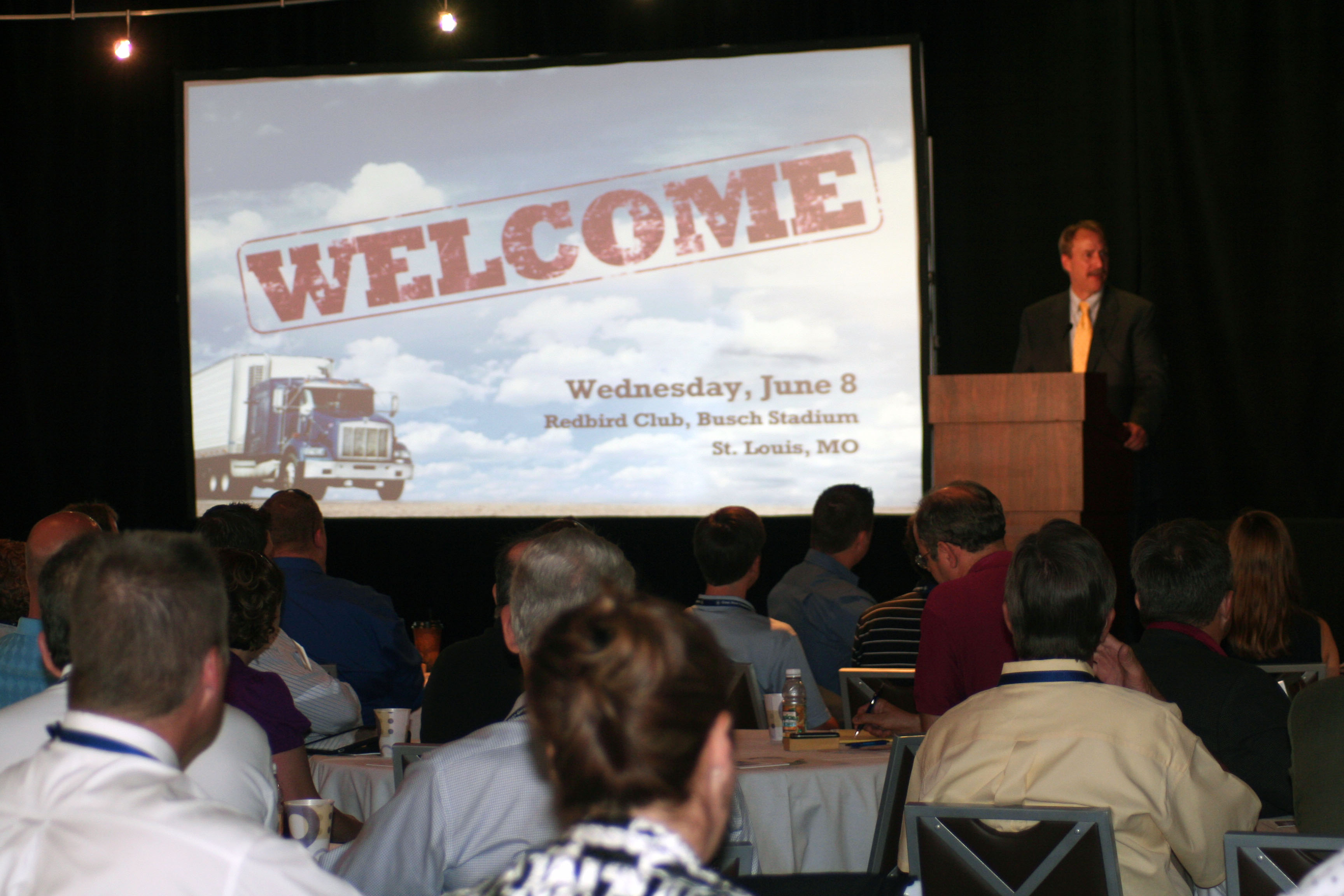
At Roberts Perryman, P.C.’s annual Trucking Leadership Symposium on June 4, 2015, TMAF provided an update on the movement’s progress into its second year. TMAF Co-chairman, President of Jet Express, Inc. and Second Vice Chairman of American Trucking Associations (ATA) Kevin Burch, along with President of Tennant Truck Lines, Inc. and Chairman of ATA Communications & Image Policy Committee Aaron Tennant and Senior Vice President of ATA’s Communications & Public Affairs Elisabeth Barna, spoke on behalf of TMAF, highlighting the importance of a truck driver and of the industry America takes for granted.

After raising over 70% of their $1 million goal in the first six months of launching, TMAF is now into their second year and continues to challenge everyone in the industry to join the movement. Goals for TMAF’s second year include supporting federal and state advocacy efforts, continuing fundraising effects, consumer ad campaigns, and promoting trucking as a great career option. Determined to provide a positive image for the trucking industry, TMAF allows truckers to tell their stories through advertisements and puts a human face on the industry.

TMAF believes a trucker should take pride in what they do, as they are professionals America depends on. Why? Because trucking provides a majority of the shipping and movement of goods in the United States. According to TMAF’s website, http://www.truckingmovesamerica.com, more than 80% of U.S. communities rely solely on trucking for delivery of goods. Chances are “if you bought it, a truck brought it.” So, whether it be your father, husband, neighbor, or friend – a trucker helps move America forward each day.

Promoting trucking as a great career choice is important to TMAF as truck drivers are in demand across the country. The Wall Street Journal recently reported a driver shortage across the trucking industry. http://www.wsj.com/articles/driver-shortage-ripples-across-trucking-industry-1435057224 The “Baby Boomer” truck drivers are retiring with fewer new drivers entering the profession. This has resulted in a shortage of 35,000 to 40,000 drivers, according to the ATA.

Want to join the TMAF movement? TMAF sells customizable banners and trailer wraps. Or, you can choose from several of TMAF’s shareable images to share on social media. An entire list of donors and information on how to make a contribution are available on TruckingMovesAmerica.com.

Shareable Social Media Images from TMAF’s Website

tmafblog1 tmafblog2

Anna Newell is an associate attorney at Roberts Perryman.  Anna’s practice focuses on transportation, insurance coverage and defense.

Anna Newell

Roberts Perryman has been a leader in transportation defense for over 50 years with offices in St. Louis and Springfield, MO and Belleville, IL. http://www.robertsperryman.com
Posted in Uncategorized | Leave a comment

Roberts Perryman PC Welcomes New Associate, Anna Newell

ST. LOUIS, MO — 6/29/15 –Roberts Perryman PC is pleased to announce a new hire, Anna Newell. Anna will be working in the St. Louis office on 1034 South Brentwood, Suite 2100.

Anna’s practice will focus on transportation, insurance coverage and defense. Anna graduated from Southern Illinois University School of Law. While at Southern Illinois University, she was the Casenote and Comment Editor of the SIU Law Journal, and a member of the Student Bar Association Community Service Committee. Anna was also a member of the SIU Law Student Ambassador Program. She completed two internships while attending law school. Her first internship was for Judge Sue E. Myerscough, United States District Court Judge for the Central District of Illinois in Springfield, IL. The second internship was at Hepler Broom, LLC with a focus on auto accident defense and toxic torts.

“We are very fortunate to have Anna join our firm.” said Ted L. Perryman, Chairman of Roberts Perryman. “As we grow we have been thrilled to be able to hire attorneys who understand the important role client service plays in being the go-to firm in transportation and trucking defense. Anna’s background and experience has allowed her to jump right in and be a resource to our firm and clients.”
Roberts Perryman has been a leader in transportation for over 50 years with offices in St. Louis and Springfield, MO and Belleville, IL. http://www.robertsperryman.com

Contact: Jennifer Mason, Director, Marketing & Communications
+1 314 421-1850 or e-mail jmason@robertsperryman.com

Anna Newell

Posted in Uncategorized | Leave a comment

Operation Safe Driver Week: Implications?

The Commercial Vehicle Safety Alliance (CVSA) released the results from its Operation Safe Driver Week and found that non-commercial motor vehicle drivers speed significantly more so than commercial motor vehicle drivers. Non-CMV drivers were issued a warning or citation for speeding 52.3 % of the time, versus 5.8 % of CMV drivers. The percentage of warnings and citations issued to CMV drivers for speeding decreased from 7.3% in 2013 to 5.8% in 2014. It was 10.8% in 2012. The percentage of warnings and citations issued to non-CMV drivers for speeding decreased 56.0% in 2013 to 52.3% in 2014.

The top five warnings and citations issued to CMV drivers were: 1) speeding; 2) failure to use a seat belt; 3) failure to obey traffic control device; 4) improper lane change; and following too close.

The top five warnings and citations issued to non-CMV drivers were: 1) speeding; 2) failure to use a safety belt; 3) failure to obey a traffic control device; 4) possession/use/under the influence of alcohol; and 5) improper lane change.

The number of warnings and citations per contact with CMV drivers was 0.45 whereas the number of warnings and citations per contact with non-CMV drivers was 1.27, or nearly three times the amount.

The percentage of warnings and citations issued to CMV drivers for failing to obey traffic control devices increased from 1.8% in 2013 to 2.5% in 2014. The percentages of warnings and citations issued to CMV drivers for failure to wear a seatbelt decreased from 2.9% in 2013 to 2.8% in 2014. It was 3.8% in 2012. For non-CNV drivers the percentage increased from 2.6% in 2013 to 34.1% in 2014.

Is it now time to roll out CSA for non-CMV drivers? Wouldn’t it be interesting to have non-truck drivers ranked in percentages to other non-CMV drivers? What if we made every non-CMV violation public and posted it on a website? Studies like this make it clear that the trucking industry is taking steps to improve its safety record and reduce violations.

This article was written by John L. Walker, a partner at Roberts Perryman PC

Posted in Uncategorized | Leave a comment

2015 Trucking Leadership Symposium, June 4th, Ballpark Village Busch Stadium, SAVE THE DATE!!

Roberts Perryman will be hosting the Trucking Leadership Symposium at Busch Stadium’s Ballpark Village in the Fox Sports Midwest Live!!

The speaker and presentation line-up will be released shortly. If you have any requests for topics to be covered please feel free to contact jmason@robertsperryman.com, or post on our Facebook page (Roberts Perryman P.C.).

Prior speakers include:
Governor Bill Graves, CEO American Trucking Associations
Dave Osiecki, Senior Vice President American Trucking Associations
Mike Card, CEO/President Combined Transport, Former Chairman American Trucking Associations
Steve Phillips, Senior Vice President Operations, Werner Enterprises
Greg Hodgen, COO/President Groendyke Transport, Former Chairman National Tank Truck Carriers
Gary Salisbury, CEO/President Fikes Truck Line, Former Chairman Truckload Carriers Association
Aaron Tennant, CEO/President Tennant Truck Lines, Chairman ATA Image Committee

Prior topics include:
Federal Regulatory Update
Jury of Our Peers: Inside a Trucking Case
Natural Gas Panel
Driver Shortage, Recruitment and Image Roundtable
Succession Planning Best Practices
Roundtable of State & Federal Law Enforcement Officials
Washington Insider Update
State Legislative Update
Latest CSA Information
Crowd & Ponder
149
BPV Fox Live
BPV Fox

Stay tuned for more information coming to you soon!

Space will be limited this year so if you want to “officially” reserve a spot please contact Jennifer Mason, jmason@robertsperryman.com

Posted in Uncategorized | Leave a comment