Monday Night Football and the World Series Exemption to the New Hours of Service Rule?

While looking for a job as an attorney this fall, I was able to keep myself busy hauling grain from Lincoln County Missouri to E. St. Louis IL.   Besides being an attorney, I am also a professional truck driver.

On Monday in late October of last year, as the local farmers were bringing in their harvest and jamming the streets for miles around the local grain elevator, I was dispatched to take a load through downtown St. Louis.  As luck would have it, the St. Louis Cardinals were playing Game 5 of the World Series and the mighty Rams were on the gridiron against what would later be the Super Bowl Champion Seattle Seahawks for a Monday Night Football  game.  Downtown St. Louis was electric with excitement.  But, it was also a parking lot with waves of sports fans cramming into downtown all at the same hour.

I was confronted with a dilemma.  It was about 5 pm when I started to leave the grain elevator and head to East St. Louis.  I had to go through the heart of downtown and fight the traffic.  I knew if I took the load into St. Louis I would have spend hours sitting in traffic trying to work my way through the crazy baseball and football fans making their way through downtown.  Instead of fighting traffic, getting frustrated and possibly finding myself in the middle of an accident waiting to happen, I called my wife and told her to pick me up at the local Walmart about an hour west of downtown.  Instead of fighting traffic, my wife and kids brought me home for dinner and play time.  I waited for rush hour traffic to die down and for the sports fans to get into the stadiums.

I then had my wife and kids take me back to the truck.  The problem was I was running up against the 14 hour rule.  Any delay would put me over 14 hours.  I hopped in my Kenworth, tuned the radio to the mighty KMOX, and listened to the Red Birds as I drove through downtown (sorry Rams).  It looked like a ghost town except for the MO HWY Patrol parked every few miles.  I could not believe how empty the roads were.  Apparently, those who were not lucky enough to get tickets were at home watching on television.  I was able to unload my grain in record time and take the truck back to the Yard (all within 14 hours, of course!).

As a professional driver, I should be allowed to make professional choices.  The new HOS rules prohibit professional drivers from being able to make decisions that benefit the driver, allow him time to spend with his family and yet drive while rested and roads not congested.    I am sure everyone on the road that evening with their minds on baseball and football were elated that my fully grossed out grain wagon was not plugging up the highway.  I was happy because I was able to spend some quality time with my family and still get make a day’s wages.  I was not tired or forced to drive fatigued.  In fact, I was more relaxed and refreshed than if I had spent 2 hours sitting in bumper to bumper traffic.  Not to mention coming home to a tired wife who had the kids alone all day.  Everyone wins when smart drivers make smart choices.  Unfortunately, the new hours of service rules do not have a Monday Night Football or World Series exemption.

Milan Berry

Posted in Uncategorized | Leave a comment

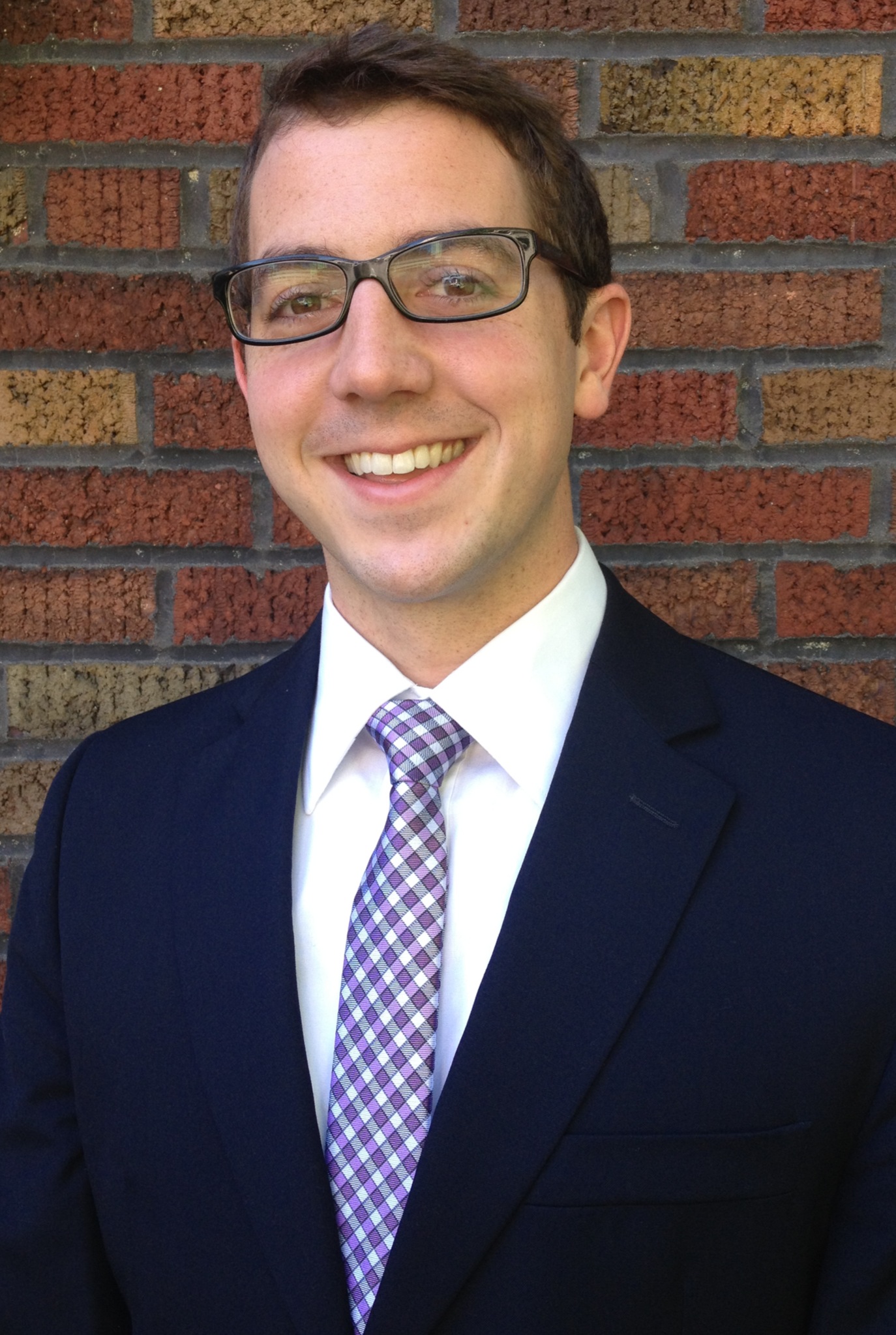
Milan Berry Joins Roberts Perryman’s Trucking Litigation Group

Roberts Perryman is pleased to announce the fourth new attorney in 3 months. Milan Berry joined the Trucking Litigation practice group on December 1, 2013.

Milan brings a wealth of experience to his role at Roberts Perryman. While putting himself through undergrad and law school, Milan drove semi-trucks and operated his own trucking company.  Milan has driven 18 wheelers for WCX/Schanno & Dynamic Transit, Swift Transportation, Kallmeyer Bros. and Sodrel Truck Lines.  Milan also started his own trucking company, Article I Leasing, LLC, while attending law school.  Milan has almost 20 years in the trucking industry.  Like many in the trucking industry, Milan inherited his love of trucking from his father who also made a career out of driving.  

Upon accepting his offer, Milan said, “I always knew I wanted to practice trucking law. I feel like I have found my niche.”
As we welcome our new attorneys to our team, I thought it would be a good opportunity for us to broaden the scope of the information we share through Driven to Keep You Driving.  In the coming weeks and months we will be showcasing blogs from all of our attorneys.  Our firm, while relatively small, has a great group of lawyers who can share different experiences and information. 

In our next blog Milan will relate an experience he had while trying to stay within his hours of service during two major events in St. Louis.  Following Milan, Korissa Zickrick will bring us up to date on new laws in Illinois.  Next on the roster will be Jenn Wood’s interesting take on a statement recently made by Ann Ferro and the reality of passenger vehicles in causing crashes.

Stay tuned, keep reading and enjoy!Image

Posted in Uncategorized | Leave a comment

FMCSA Announces Details on Removing Adjudicated Citations from Carriers’ CSA SMS Scores

Yesterday the FMCSA announced its long-awaited proposed process for the treatment of adjudicated (e.g. dismissed) citations in the MCMIS.  Data from the MCMIS is reflected in drivers’ Pre-employment Screening (PSP) reports and is used to develop motor carriers’ CSA Safety Measurement System (SMS) scores.  This process will hopefully provide more uniformity, since state DataQ analysts were previously instructed by FMCSA to use their own discretion in deciding which adjudicated citations to remove from carriers’ MCMIS records.

This new proposed procedure will allow motor carriers to file a Request for Review (RDR) in the DataQ system when a citation is adjudicated in court.  State and Federal systems will be modified to reflect (upon a Data Q challenge) citations that were 1) dismissed or resulting in a not guilty finding 2) resulting in a conviction or a different or lesser degree; or 3) resulted in the conviction of the original charge.  Motor carriers who file RDRs on adjudicated citations and provide proper documentation will have their MCMIS records amended.  Those adjudicated citations that result in a not guilty verdict or dismissed charge will be removed from both the SMS and PSP.  Those that result in the conviction of a different charge will be retained with the initial violation noted but will be flagged as “resulted in a conviction of a different charge.”  In these cases, the SMS severity weight will be set to the lowest value in that BASIC (generally 1 point).  Citations resulting in the payment of a fine or court cost, even if dismissed, will continue to be recorded as a conviction.

Posted in Uncategorized | Leave a comment

Roberts Perryman Announces Three New Hires

A quick update on what is going on at Roberts Perryman.  We recently added three new attorneys who will be handling our growing trucking and workers’ compensation practices.  These attorneys understand not only how to provide the kind of client service and counsel Roberts Perryman has built its reputation on, but they also have the ability and skills to grow our firm’s business. I am thrilled to have them all on board.

Julie Hovermale is returning to Roberts Perryman to head up the Workers’ Compensation practice area. Julie worked at RP for several years before taking some time off to take care of her family.  We are extremely happy to have her return and lead the defense for our workers’ compensation clients.  Julie is an experienced defense attorney who has defended employers and their insurers on Workers’ Compensation claims for over twelve years.  Prior to joining Roberts Perryman, she was a staff attorney for the Chief Judge of Cook County in Chicago, Illinois.  Additionally, Julie was engaged in private practice in Springfield, Illinois with a focus on Workers’ Compensation.  In her role at Roberts Perryman, she defends employers, insurers and self-insured companies on workers’ compensation matters in both Illinois and Missouri.

Julie Hovermale 13

Josh Owings will focus on Trucking and insurance.  Josh Owings graduated from Washington University School of Law with honors. While at Washington University, Josh worked on the Washington University Jurisprudence Review as a Senior Staff Editor and co-chaired the board of the Wiley Rutledge Moot Court competition. He also participated in Washington University’s top ranked clinical education program where he advocated for clients in the Circuit Court of St. Louis County. During his final year of law school, Josh gained transportation law experience working as a clerk in the legal department of a St. Louis based transportation company.  Josh’s primary focus at RP will be on the business side of trucking.

Josh Owings

Jennifer Wood will also be practicing in areas of Trucking Litigation and Insurance Defense.  Jennifer joins Robert Perryman with a wealth of experience in the transportation industry. Prior to completing her JD at Saint Louis University, she enjoyed a career working in both car rental and moving companies. In her former career, Jennifer had a vast amount of experience in risk management and claims resolution.  We also like the fact that her husband is a full-time truck driver.

WOOD_Jennifer

Posted in Uncategorized | Tagged , , | Leave a comment

Missouri Legislature Overrides the Veto of No Pay No Play Legislation Limiting Uninsured Motorists’ Noneconomic Damages

The Missouri legislature recently passed a law that limits an uninsured driver from recovering noneconomic damages against an insured driver.

Section 303.360, RSMo. requires an uninsured motorist to waive the ability to have a cause of action or otherwise collect noneconomic damages against a person who is in compliance with the financial responsibility laws due to a motor vehicle accident in which the insured driver is alleged to be at fault.  “An uninsured motorist” is deemed to include:  (1) an uninsured motorist who is the owner of the vehicle; (2) an uninsured permissive driver of the vehicle; and (3) any uninsured non permissive driver.”

The statute states that the waiver will not apply if it can be proven that the accident was caused, in whole or in part, by a tortfeasor who operated a motor vehicle under the influence of drugs or alcohol, or who is convicted of involuntary manslaughter or assault in the second degree.  We interpret this exemption of the waiver to apply to situations where someone other than the uninsured driver is under the influence of drugs or alcohol or is convicted of involuntary manslaughter.

The statute also states the waiver does not apply to an uninsured motorist whose immediate prior insurance policy was terminated or nonrenewed for failure to pay premiums, unless the termination or nonrenewal for failure to pay premiums was provided by such insurer at least six months prior to the accident.

The remainder of the statute states that the trier of fact will not be informed of the waiver’s effect on the total recovery and any award in favor of the uninsured motorist will be reduced by an amount equal to the portion of the award representing compensation for noneconomic losses.  Nothing in the statute prevents an uninsured motorist to recover his or her economic losses.  Passengers in the uninsured motor vehicle are not subject to the waiver.

Section 303.390 was passed on a veto override.  We anticipate the plaintiff bar will contest its constitutionality in limiting the types of damages that can be recovered.  The impact of this statute will be limited to those situations where an uninsured motorist brings a lawsuit against an insured driver.  The uninsured motorist’s recovery will be limited to economic damages such as medical specials, wage loss, vehicle damage and loss of use.  The uninsured motorist will not be able to recover pain and suffering.

If you have any further questions regarding the statute, please do not hesitate to give me a call, 314-421-1850, or send me an email, tperryman@robertsperryman.com

Posted in Uncategorized | Tagged , , , , , , , | Leave a comment

Admissibility of FMCSA’s Compliance, Safety and Accountability (CSA)

In 2010 the Federal Motor Carrier Safety Administration introduced a safety initiative designed to reduce crashes, injuries and fatalities involving commercial motor vehicles.  The program, called Compliance, Safety and Accountability (CSA) tracks data compiled by FMCSA and its state partners (law enforcement) and uses a methodology to assign rankings to motor carriers in various categories called BASICs.

FMCSA developed CSA as a tool to identify motor carriers that need closer scrutiny wherein corrective action can be taken to bring the motor carrier into compliance.  A secondary purpose allows interested third parties such as shippers, brokers and insurance carriers to use the BASIC rankings and data to help make decisions about the motor carrier.

The challenge presented by CSA to attorneys like Roberts Perryman who concentrate in defending motor carriers and their drivers in personal injury litigation is whether BASIC rankings are going to be used adversely against our clients.  While it is clear that FMCSA did not develop CSA and the BASIC rankings with accident litigation in mind, it is now being used by personal injury attorneys to assist in establishing liability against motor carriers.

Recently I had an opportunity to speak at ATA’s Litigation General Counsel Forum in Coeur D’Alene ID on the issue of whether CSA rankings and data is admissible.  The presentation was followed up with an article on the admissibility of CSA in the August newsletter or the International Association of Defense Counsel.  For a copy of the article click on the following link:

http://www.iadclaw.org/assets/publication/Transportation_Law_August_2013.pdf

Image

Posted in Uncategorized | 2 Comments

Hours of Service and the US Court of Appeals Decision

On July 1, 2013 new hours of service requirements took effect for operators of commercial motor vehicles.  The new rule includes several changes to the HOS regulations including changes to the 34 restart rule and a requirement that a driver take a 30 minute rest break on a daily basis.

The ATA challenged the new HOS rules, but on August 2, 2013 the U.S. Court of Appeals for the District of Columbia denied the challenge.  The opinion, while mostly unfavorable, is an interesting read.   In upholding the HOS rules promulgated by the FMCSA, the Court held that the FMCSA “acted reasonably” in tailoring the new restart rule to promote driver health and safety.

The Court stated in its conclusion that the decision brings to an end the permanent warfare surrounding the HOS rules.  Amusingly, the Court concluded with the following: “Though FMCSA won the day not on the strengths of its rulemaking prowess, but through the artless war of attrition, the controversies of this round are ended.”

While most of us in the trucking industry may disagree with the new Rule and the Court’s decision, we are grateful that the ATA took this matter on and effectively advocated the concerns of the industry.  The war is over.  Let’s hope we can enjoy the peace.

Posted in Uncategorized | Leave a comment